EnchantedLearning.com is a user-supported site. As a bonus, site members have access to a banner-ad-free version of the site, with print-friendly pages. Click here to learn more.
The Harp Seal (Phoca groenlandica) is a marine mammal that spends most of its life in the sea, but also goes onto ice floes. It is a pinniped (related to walruses and sea lions) that lives along shorelines in the North Atlantic and the Arctic Ocean, ranging from Russia to Greenland to Canada. (Family Phocidae, Subfamily Phocinae)
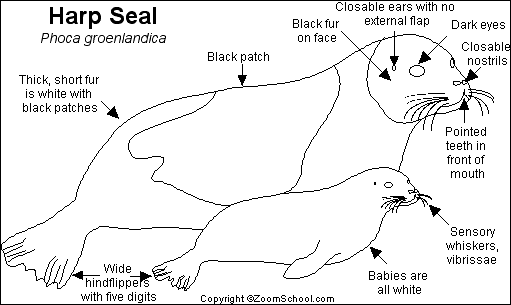
Anatomy: The Harp Seal has short, thick white fur with black patches and a black face. The young are all white. These seals grow to be up to 5.5 feet (1.7 m) long and can weigh up to 285 pounds (130 kg); females are a bit smaller. The whiskers (called vibrissae) contribute to the seal's sense of touch. The nostrils are closed in the resting state.
Diet: Harp Seals are carnivores (meat-eaters). They eat mostly fish and crustaceans. Seals don't chew their food; they swallow it in large chunks. They can crush the shells of crustaceans with their flat back teeth.